

Nitrous oxide (N2O) is directly related to biological process conditions in wastewater treatment and has a significant climate impact. According to IPCC assessments, this impact is approximately 265–273 times greater than that of CO2, meaning that even short-term emissions peaks can significantly influence a treatment plant’s overall carbon footprint.
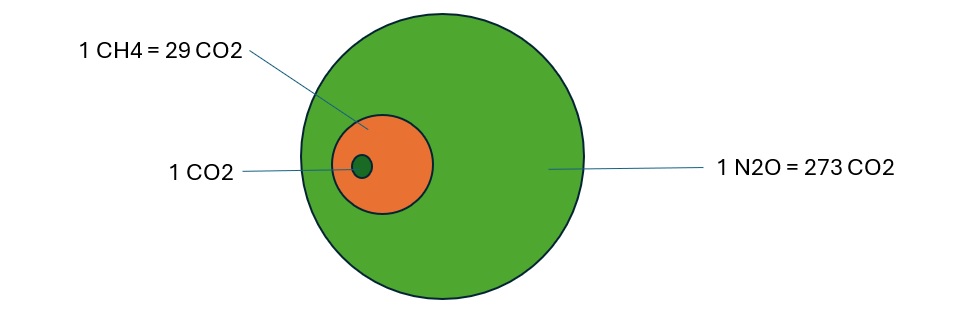
As a result, emissions that were previously considered negligible are becoming operationally relevant, and regulatory and reporting requirements are increasingly focused on quantifying and reducing greenhouse gas emissions. Recent European developments, including the revision of the Urban Waste Water Directive, further underscore this shift towards more systematic monitoring of process-related emissions.
As a result, N2O is gaining importance as a key process and emission parameter. Unlike many conventional parameters, N2O emissions are highly dynamic and can change rapidly in response to variations in process conditions, such as oxygen availability, ammonium load, carbon conditions, and control strategies.
This causes emission variations and peaks, especially during transient operating conditions such as load fluctuations or control adjustments or process instabilities. Without continuous monitoring, these events can remain undetectable — creating a gap between the actual process behavior and the data available to operators.
At the same time, raising regulatory expectations requires not only the quantification of emissions, but also a transparent understanding of their origin and behavior within the process.
To address this, operators must not only quantify emissions, but also understand their source and respond accordingly under real operating conditions.
Thanks to the COMBIMASS ® GA-s Hybrid N2O monitoring system , operators will have the information for a continuous understanding of emissions behaviour – not afterwards, but during operation. Only then can processes be stabilized, control strategies adjusted, and emissions actively reduced.
The COMBIMASS® GA-s Hybrid N2O Monitoring System in combination with the VACOMASS® Flexcontrol Control System (an intelligent aeration control system based on PID control, AI-supported optimization and fuzzy logic algorithms) form a closed, real-time control loop between emission monitoring and plant operation. Instead of a delayed external assessment, the data becomes a direct and active input for continuous demand-based process optimization, enabling immediate feedback on the process, maintaining stable operating conditions and actively influencing emissions behavior.